Step-by-Step Guide to Buying Land in Franklin GA
February 19, 2026
February 19, 2026
Thinking about buying land near Franklin so you can build, farm, or invest? Rural acreage offers freedom and value, but the details can be tricky. Septic feasibility, legal access, and utilities often make or break a deal. You deserve a straightforward plan that helps you avoid surprises and move forward with confidence.
In this guide, you’ll learn how to decode listing language, confirm county approvals, check utilities and environmental constraints, understand financing, and follow a clean due diligence checklist tailored to Heard County and western Coweta. Let’s dive in.
“Apx acreage” or “approx.” typically comes from tax records or a seller estimate. If exact acreage matters for price, yield, or build plans, confirm with a recorded survey. For lender or title work, an ALTA/NSPS survey provides the most complete picture of boundaries and encumbrances. Review what an ALTA/NSPS survey covers.
A recent survey can save time and questions. Check the date, who prepared it, and the scope. Boundary-only surveys locate corners and lines. ALTA/NSPS surveys add improvements, easements, and encroachments that title companies and lenders often require.
Listings may say a site “percs” or is “septic approved.” Treat this as a starting point. In Heard and Coweta, the County Environmental Health office manages approvals under the Georgia DPH onsite sewage program and manual. Ask the seller for any recorded septic permit, soil site evaluation, and the name of the certified soil classifier. You can confirm local requirements with the Heard County Environmental Health office.
“Water available” could mean public water is at the road, a nearby line requires a tap and fees, or a private system serves the area. Many rural parcels still need private wells. Before you write an offer, call to confirm service type, hook-up steps, and costs. Start with District 4 Public Health’s Heard County office for well guidance.
Deeded road frontage is strongest. Access by recorded easement can work, but review width, maintenance obligations, and any use limits. If a parcel is truly landlocked, Georgia’s private way statute outlines a court process to obtain access. That process takes time and is not guaranteed. Price landlocked or unclear-access parcels conservatively until access is verified in writing.
Flooding and wetlands shrink your buildable area and affect septic siting. Check FEMA flood maps, the National Wetlands Inventory, and county GIS overlays during due diligence. Plan for permits, elevation requirements, and potential flood insurance if any part of the site is in a Special Flood Hazard Area.
These can add value or limit your use. Ask for any timber cruise reports, lease copies, or recorded reservations. Confirm what transfers at closing.
Call the county planning office before you write an offer. Verify the current zoning, minimum lot size, setbacks, and whether your intended use is allowed. For Franklin-area parcels, start with Heard County Building & Zoning. Western Coweta parcels have their own processes and standards through Coweta County Planning & Zoning.
Heard and Coweta use District 4 Public Health to regulate septic permits and site evaluations under the state manual. Ask for existing permits and evaluations and confirm that they fit your house location and bedroom count. Learn more from the Georgia DPH onsite sewage manual and the Heard County Environmental Health office.
If you plan to carve multiple home sites out of a larger tract, you must follow county subdivision rules. Minimum lot size, frontage, road improvements, and septic reserve areas all matter. Heard County posts processes and fees here: Heard County Building & Zoning. Coweta has a formal plat review process with its planning department.
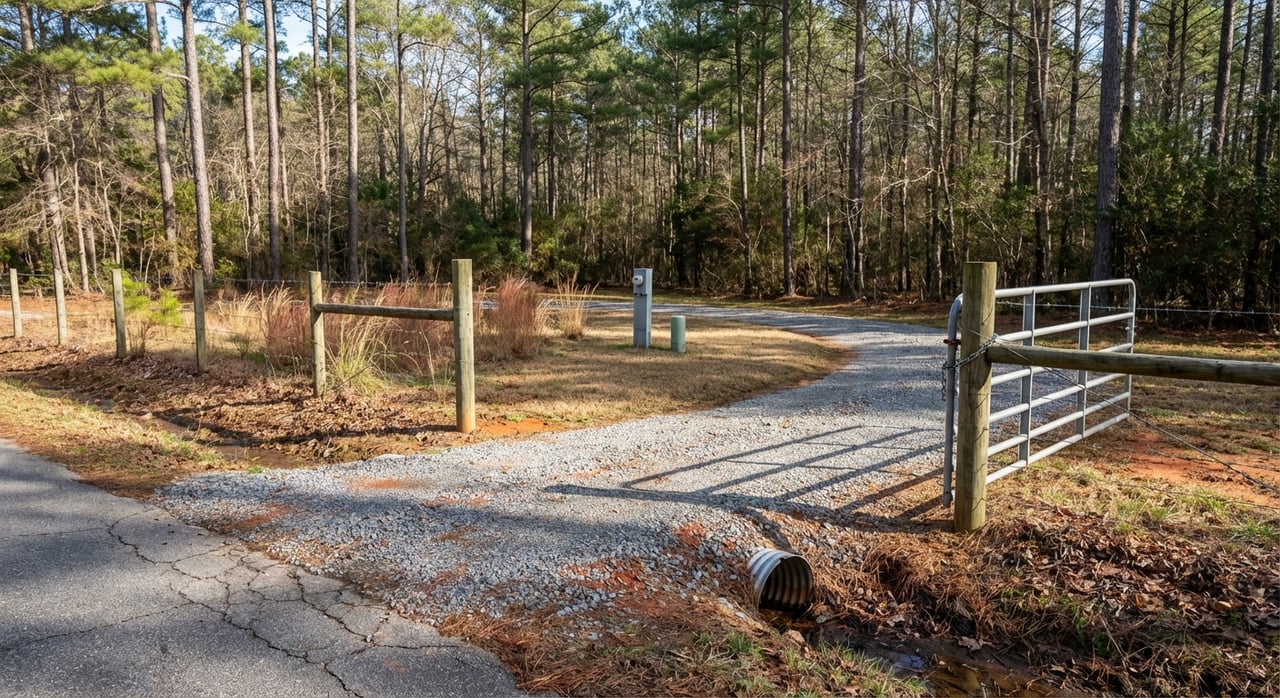
Determine whether the road is county maintained, state maintained, or private. New driveways on county right of way often require a permit and culvert sizing. For county contacts in the region, see Coweta County government contacts and check with Heard County public works.
Georgia allows agricultural or conservation use assessments that can reduce property taxes for qualifying acreage. Check whether the parcel has a current-use filing and what happens at transfer. Forms and assessor contacts are on the Heard County Board of Tax Assessors parcel search and the PT-283A use-value application page.
Order a title commitment early and review all exceptions. Recorded easements, covenants, or utility corridors can limit building locations and future splits. A current survey often helps cure title exceptions and document legal access. See what an ALTA/NSPS survey includes.
“Power at road” can still mean you need a line extension, transformer, or easement. Get a service plan and cost estimate directly from the local provider. Coweta-Fayette EMC and other local EMCs serve parts of the Franklin area. Use this starting point for local EMC provider information.
Most rural tracts use private wells and septic systems. Ask the county environmental health office if your parcel lies in a public water service area and what steps are needed for a tap or a new well. Start with District 4 Public Health in Heard County.
Coverage varies by road. If reliable internet is important, check provider maps for the exact address. You can get a quick read on Heard County fiber availability, then confirm directly with the providers.
Run the parcel through FEMA’s Flood Map Service and the U.S. Fish & Wildlife National Wetlands Inventory. If any portion is in a mapped flood zone, plan for elevation data, potential floodplain permits, and lender-required insurance if you finance the purchase. County floodplain administrators can clarify local rules.
A boundary survey locates lines and corners. An ALTA/NSPS land title survey maps improvements and encumbrances to a national standard and is often required for complex parcels or non-residential loans. Learn what lenders and title insurers expect in an ALTA/NSPS survey.
If access depends on an easement, get the recorded document and confirm width, allowed uses, and who maintains the road. If a property lacks legal access, Georgia’s private way statute describes a court process to secure access, but it should not be your plan A. Price and plan as if you must establish access before building.
Compared to home mortgages, land loans usually require larger down payments and shorter terms. Industry ranges commonly run 20 to 50 percent down depending on parcel type and lender. For a quick overview, review this land financing overview.
If you plan agricultural operations or have farm income, you may qualify for USDA or Farm Credit programs. The USDA Farm Service Agency farm ownership loans offer direct and guaranteed options for eligible buyers. Regional Farm Credit associations, such as AgGeorgia Farm Credit, finance working farms, timber, and rural properties.
Expect requests for a recent survey, proof of legal access, clear title, and evidence that utilities and septic are feasible. Appraisals for vacant land can be less predictable than for homes, so build in time for the lender’s process.
If you want a second set of eyes on access, utilities, and county steps, we’re here to help. We live and work in this market, and we know how to navigate rural due diligence so you can buy with clarity. Reach out to Cindy Horsley to Schedule a Free Consultation. We’ll review your goals, map out a plan, and help you move forward with confidence.
We are committed to providing exceptional service and guiding you through every step of your real estate journey. Whether you're buying, selling, or investing, our experienced team offers personalized support tailored to your unique needs.
22 PARKS AVE NEWNAN GA 30263