Inside the Peachtree City Golf Cart Lifestyle
March 5, 2026
March 5, 2026
Ever wonder why so many locals in Peachtree City choose a golf cart over a car for errands, school runs, and weekend fun? If you are picturing a golf course, think bigger. The city’s paved, multi-use paths form a true transportation network that residents use year-round to get almost anywhere in town. In this guide, you will learn how cart life works, what rules to know, how it shapes your home search, and simple tips to get rolling with confidence. Let’s dive in.
Cart life means everyday mobility on a connected system of paved paths rather than only on fairways. The City reports more than 100 miles of multi-use paths that link neighborhoods to shopping centers, schools, lakes, parks, and community hubs. You can explore the system and planning details on the city’s Multi-Use Path pages, which outline maps, master plans, and design features like bridges and underpasses that limit major road crossings. Learn more about the path network.
The scale is unique. Local reporting places the community’s registered cart population in the roughly 10,000 to 11,000 range, which helps explain why carts are a daily sight at grocery stores and village centers. That cart count is an estimate drawn from news coverage and visitor materials rather than a single census, but it gives you a feel for the culture here. See the Seattle Times feature on cart culture.
The multi-use paths are the backbone of local travel. Carts, bikes, and pedestrians share these paved lanes, and most day-to-day trips stick to this network. The city designs for safety with grade-separated underpasses and bridges, so you avoid most major road conflicts. Review the city’s path system overview.
Carts are not allowed to travel along major state highways. Community guidance around big events also reminds drivers that you may only cross Ga. Hwy 54, Ga. Hwy 74, Peachtree Parkway, and Crosstown Drive at authorized crossings. This is a long-standing safety rule that the city and local press reinforce for holiday traffic. See event guidance that reiterates crossing rules.
If you plan to use the paths, you must register your cart with the city. New owners need to register within 10 days. The current program requires decals to be placed on the front and rear of the cart. Resident decals are sold on a multi-year schedule, with the city listing a 3-year total of $45 for 2026 through 2028. Non-residents pay a separate annual path-user fee the city lists at $235 per year, plus a registration charge. Always verify the latest fee schedule and deadlines on the city’s site. Check current rules, fees, and decal placement.
The city enforces its registration and path rules. If you let your stickers lapse or operate on paths without a valid registration, you risk a citation. Renewal notices and any late-fee language are published on the city’s registration pages, so review dates and keep your decals current. Confirm deadlines before you ride.
Local safety messaging has long set clear guardrails for young drivers. Community updates have stated that no one under 12 may drive on public paths, ages 12 to 14 must have a supervising adult in the front seat, and additional rules apply at 15 with a learner’s permit and 16 or older. Because details can change, check current guidance with the city’s police safety program and review any posted campus rules where students park. Review the Police Department’s path safety page and see a sample school parking resource.
Georgia law distinguishes between two common vehicle types:
In Peachtree City, LSVs have extra rules, including an amber strobe light requirement and operation by licensed drivers when used on public rights-of-way. If an LSV is driven on the paths, it must be set not to exceed 20 mph, just like other motorized carts. For registration and use details, start with the city’s program overview. See the city’s Paths and Golf Carts page.
The Police Department runs a Multi-Use Path & Golf Cart Safety Program focused on courtesy and shared-right-of-way behavior. Key points include giving pedestrians the right-of-way, using an audible signal when approaching from behind, and slowing to posted limits. The city also requires carts to stop before entering a roadway at crossings, which is standard intersection safety. Review the latest reminders before you head out. Explore the city’s safety guidance.
The path system makes short errands by cart easy. You can reach village shopping centers, the library, medical parks, lakes, neighborhood parks, and dining without getting in a car. The city explicitly plans paths to connect these everyday destinations, which explains the steady flow of carts at grocery lots. See how paths link centers and lakes.
Carts are also part of school-day routines. High schools in the area have long provided dedicated cart parking and path connections that support student use. Policies and permit details are posted by schools and adjusted as needed to keep traffic safe. View a sample of on-campus cart parking guidance.
Weekends and holidays bring extra cart traffic. From July 4 festivities to concerts at the amphitheater, many community events assume cart access and designate cart parking. Around big holidays, you will see the city repeat reminders about authorized highway crossings for safety. See event-day reminders for crossings and parking.
Visiting or trying cart life before you buy? You can rent from local vendors for a day trip or an event. The visitor site lists options and basic how-to tips so you can explore without a long-term commitment. Browse cart rental guidance for visitors.
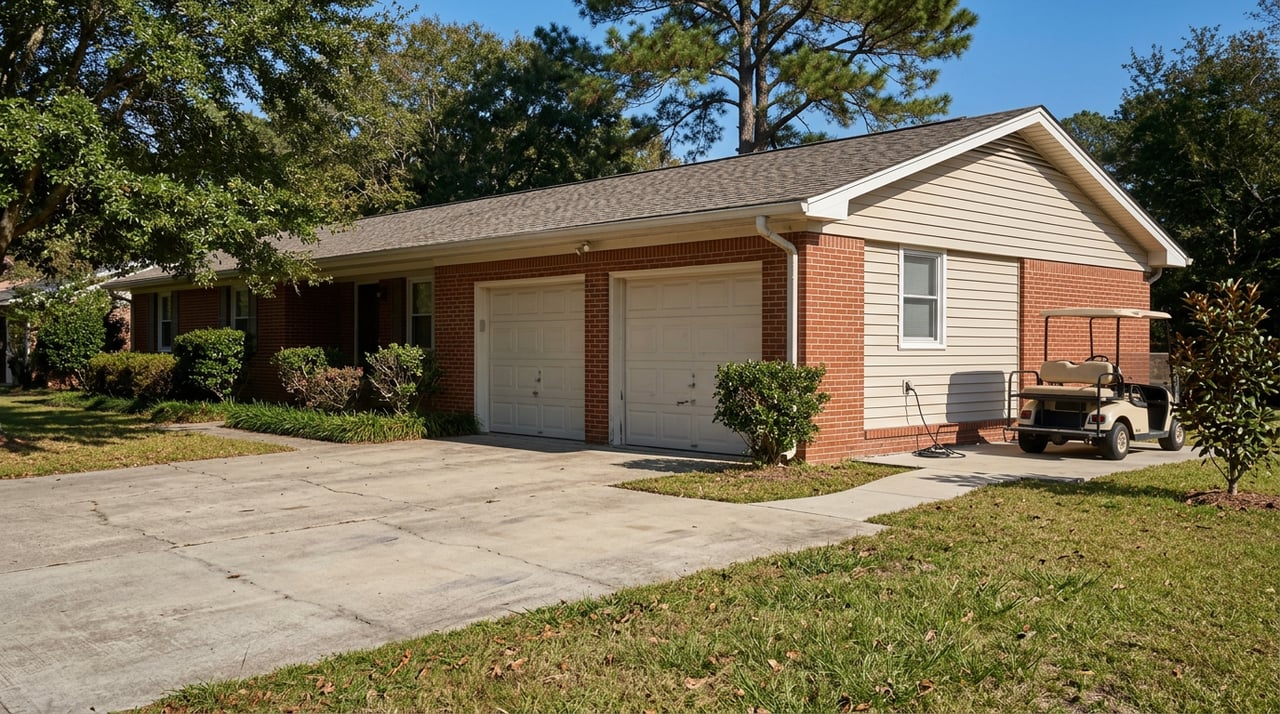
Cart culture shows up in real estate here. Many listings call out a golf cart garage, a dedicated cart bay, or a deep two-car garage where a cart can park and charge. You will also see “direct path access” or “short walk to path” as selling points. These features save time and make daily cart use easier.
If you are shopping for a home in Peachtree City or nearby areas that connect into the network, focus on four things:
Most electric carts charge from a standard 110V household outlet. For many owners, an overnight plug-in is enough to be ready for errands and school runs the next day. Battery type is a big factor. Lead-acid batteries are common and slower to charge. Lithium upgrades can shorten charge times and extend usable range. See a policy overview on cart charging basics.
Registration costs vary by residency and timing. As of the current city schedule, resident decals are sold in a 3-year block for $45 total for 2026 to 2028. Non-residents pay a separate annual path-user fee that the city lists at $235 per year. Rules have been adjusted in recent years, and fee structures have been debated locally, so check the latest city page before you budget. Review the city’s registration and fee page and see background on a 2022 fee dispute.
Use this quick list to get up to speed fast:
If cart life is on your wish list, it helps to shop with someone who understands how the path map, village centers, and school routines shape daily life. We will help you target neighborhoods with the right access, spot listings with cart-friendly garages, and confirm any HOA or city rules that matter before you make an offer.
Ready to find a home that fits the Peachtree City lifestyle? Reach out to Cindy Horsley for a friendly, no-pressure consultation. We will walk you through options, connect you with trusted local partners, and help you move with confidence.




We are committed to providing exceptional service and guiding you through every step of your real estate journey. Whether you're buying, selling, or investing, our experienced team offers personalized support tailored to your unique needs.

22 PARKS AVE NEWNAN GA 30263